Beyond one rail: What the next chapter of Dutch payments means for merchants
The Dutch payments landscape is entering a new phase. For most businesses, the shift now underway is not just a rebrand at checkout – it changes who bears the risk on a dispute, how fast money lands in your account, and what a payment method now costs you. The question this raises isn’t which single rail to back – it’s how many payment rails you build alongside each other, and how well they work together.
Dutch payments are evolving beyond a single payment rail, prompting merchants to rethink their payment strategy around flexibility, cost, risk management, settlement speed, and customer experience rather than relying on a single payment method.
New account-to-account payment models introduce both opportunities and challenges, including buyer protection, dispute management, changing pricing structures, potential settlement delays, and evolving feature support that merchants should evaluate with their PSPs.
Payment optionality is becoming a competitive advantage. Solutions like Pay by Bank enable merchants to offer familiar bank-based payment experiences while supporting broader checkout choice, helping improve conversion, support growth, and future-proof payment infrastructure.
Bank-based payments have processed the majority of Dutch ecommerce for two decades (1). As the market moves toward a more standardised, pan-European approach to A2A payments, new capabilities are arriving – cross-border acceptance, subscriptions, built-in purchase protection – alongside a different risk and cost model than the one most Dutch merchants have operated under for twenty years. Here’s what changes, and what it means for your business:
The market prompting a bigger rethink
For most merchants, the shift in the market has become a trigger for a wider conversation about payments. Rather than focusing solely on which payment methods to offer, businesses are evaluating how their payment infrastructure supports customer experience, operational efficiency, and future growth.
As a result, many organisations are moving away from a single-platform mindset and towards a more flexible approach. Instead of asking "which payment method should we offer?", businesses are asking "what mix of payment methods gets us the best combination of cost, speed, and risk?" Account-to-account (A2A) payments and open banking sit at the centre of that strategic conversation.
What you need to know
The market shift changes more than the logo at checkout. Five things are worth putting in front of your finance and risk teams now.
Disputes now sit with you, for longer.
Where A2A payments were once effectively final once authorised, the market is moving toward formal buyer-protection windows – with claims possible well after a sale, and merchants working to a fixed timeline to resolve each one. That's a new operational workload, not just a policy change: someone on your team now owns the dispute review, evidence-gathering, and response times against a clock.
Friendly fraud is now your problem too.
Because customers can dispute a delivered order as easily as a missing one, some will. Visa estimates 75% of all chargeback disputes globally are friendly fraud (2). Every claim you can't easily disprove is revenue at risk, and it changes how much you can trust your dispute rate as a fraud signal.
Pricing models are shifting, and the long-term picture is unclear.
The market is moving from flat per-transaction fees toward percentage-based pricing. A percentage fee scales with revenue in a way a flat fee never did. Model what that looks like at your volumes now, while you have time.
Your payout might arrive later.
To manage the new dispute exposure, some PSPs will introduce delayed settlement or reserve requirements. If your cash flow planning assumes near-instant settlement, check that assumption with your PSP before it changes under you.
Not every feature will be there on day one.
These capabilities are being built out market by market, and things like subscriptions, recurring payments, and full refund handling are landing in phases. If your business depends on any of these today, ask your PSP directly what's supported now, what's coming, and by when.
The case for payment optionality
Many merchants don’t think in terms of “payment optionality.” They think about revenue, checkout performance, fraud, and the cost of keeping customers happy. Offering customers a choice of payment methods is common practice, but the shifts in the market are raising the stakes, making a deliberate, well-managed payment mix more important than ever.
The market is already moving this way. Payments Europe's 2025 merchant survey found that 85% of merchants believe accepting a broad range of payment options has increased turnover (3) – a sign that choice now drives revenue, not just convenience.
One notable example is Pay by Bank. In the Netherlands, the Verenigde Betaalinstellingen Nederland (VBIN) has adopted “Pay by Bank” as a shared, market-facing brand name for PSD2-based A2A payments – giving merchants and consumers a clear, recognisable way to identify direct bank payments. It’s a move that reflects a broader shift towards optionality in the market.
Pay by Bank is built on infrastructure that already operates at scale, working on real-time payment rails under regulated open banking frameworks connected to over 95% of banks across the majority of European countries (4). It is a payment method already setting the benchmark for how scalable A2A payments should work.
A familiar journey, by design
For Dutch consumers, a Pay by Bank flow will feel immediately recognisable. The experience mirrors what the market has become highly accustomed to over the years:
The payer goes through checkout.
They are redirected to their own banking environment where the payment is securely authorised.
The PSP receives instant payment confirmation, enabling you to swiftly deliver confirmation to the payer.
This simplicity carries strategic weight. New payment methods typically require a period of consumer education before gaining meaningful traction. Pay by Bank does not face this challenge in the Dutch market – the user behaviour already exists. Offering a payment option your customers already understand removes one of the most common barriers to checkout adoption. The trust and confidence in A2A payments are already established.
This is the same trust that bank-based payments spent twenty years building. Pay by Bank inherits it rather than having to earn it from scratch.
Below is an example of how a Pay by Bank flow could look (5):
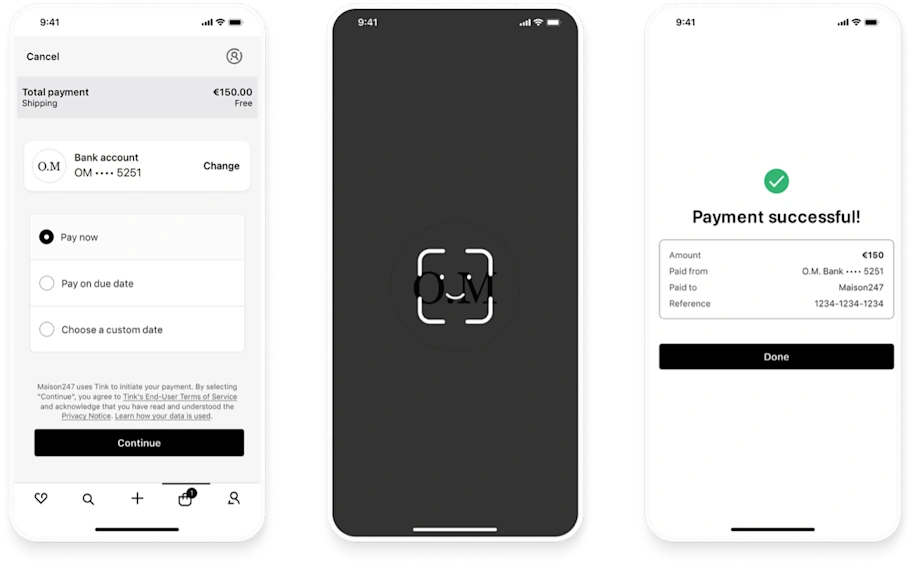
Delivered as a white-label experience, it gives you greater ownership of the checkout journey under your own brand.
And as VBIN highlights, Pay by Bank is compatible with Europe’s Instant Payments infrastructure, allowing transactions to be executed and confirmed within seconds. Coupled with extensive EU coverage, low credit risk, zero chargebacks, low fees and fast payout speeds, Pay by Bank represents a viable additional payment method alongside existing payment strategies. (6)
Is your payment strategy built for what’s next?
The European open banking market is forecast to grow at a compound annual rate of 26.3% between 2026 and 2033 (7). The Netherlands is not starting this journey from scratch – it is entering the next phase with one of Europe's strongest bank-based payment cultures already established, with consumers who have long treated A2A payments as the norm. And that familiarity is extremely valuable to you: it means any A2A option you add doesn't need to win your customers over from zero.
As this payment evolution unfolds, the most useful question for your business is not which method will dominate. It is whether your payment strategy is built for optionality in an increasingly diverse landscape – capable of supporting multiple rails, layering in data and verification capabilities, and adapting as the market develops.
1. Statista (statista.com/statistics/558358/market-share-of-online-payment-methods-in-the-netherlands/)
2. Visa, ‘Fraud-as-a-service (FaaS) and furious: five fraud trends for financial institutions’
3. Payments Europe, 2025 Merchant Survey
4. Tink, ‘The key to picking an open banking payments partner: bank coverage’
5. The three-step flow shown has been simplified for space and is provided for illustrative purposes only; actual user journeys may vary depending on the PSP, bank, merchant integration and market-specific implementation
6. Juniper Research (https://www.juniperresearch.com/press/a2a-transaction-value-to-reach-195-trillion-in-2030-globally-driven-by-advanced-value-added-services/)
7. Grand View Research, Europe Open Banking Market report
More in Open banking
2026-09-25
3 min read
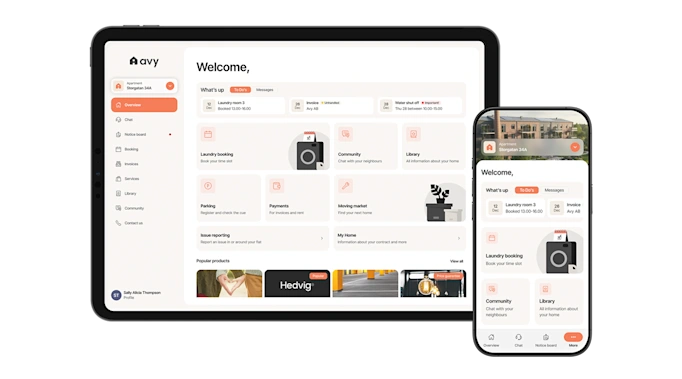
Avy: payments that power growth across markets
Avy is a customer platform for real estate, giving residents a single place to handle everything from rent to broadband. To turn payments into a driver of engagement, Avy needed low-friction and reliable payment flows. They built them with Tink.
Read more
2026-08-11
8 min read
Beyond one rail: What the next chapter of Dutch payments means for merchants
As Dutch payments evolve beyond a single rail, merchants must rethink how they balance cost, risk, settlement speed, and customer experience. Learn how payment optionality, Pay by Bank, and multi-rail strategies can help future-proof your checkout and support long-term business growth.
Read more

2026-08-11
13 min read
Building a PSP strategy for a multi-rail future
Dutch A2A payments are evolving. Discover how PSPs can help merchants navigate a multi-rail future with Pay by Bank, open banking capabilities, and value-added services that improve flexibility, reduce risk, and drive growth.
Read more
Get started with Tink
Contact our team to learn more about what we can help you build – or create an account to get started right away.