Building a Dutch payments strategy for the future

The Dutch market has spent two decades building one of Europe's most established digital payment ecosystems. For consumers, account-to-account payments are not an alternative – they are an expectation. But the ground beneath that ecosystem is shifting, a broader question is taking shape: What happens next?
The Dutch payments market is entering a new phase. As account-to-account (A2A) payments evolve across Europe and initiatives like Wero reshape the landscape, Dutch businesses need to reassess long-held assumptions about payments, risk, and customer experience.
New A2A models bring both opportunities and challenges. Changes in buyer protection, dispute processes, pricing structures, settlement timing, recurring payments, and feature availability could impact merchants and PSPs in meaningful ways.
Payment optionality is becoming the winning strategy. Rather than relying on a single payment rail, businesses should build flexible payment ecosystems that give customers choice and can adapt as the market continues to evolve.
A market built on bank payments
Few payment stories are as clean a success story as the Netherlands’. Over more than twenty years, bank-based payments quietly became the default way Dutch consumers pay online – not because it was mandated, but because it worked. Bank payments that felt trusted. Familiar. Certain.
Today, the vast majority of Dutch ecommerce runs on account-to-account payments, making this one of the most established ecosystems in Europe (1). And it’s entering a new chapter.
The landscape is shifting
Domestic account-to-account A2A champions have long worked well in their own markets – think Poland’s Blik, Sweden’s Swish, Norway’s Vipps, and Spain’s Bizum (2). But the European payments landscape is consolidating (3), with growing momentum behind standardised, pan-European approaches to account-to-account payments. For Dutch businesses, that means the rails they've relied on are evolving – and with them, the commercial and operational assumptions built on top.
What’s changing?
Much of what matters is happening below the consumer layer. As A2A payments mature across Europe, new capabilities – cross-border acceptance, subscriptions, purchase protection – are arriving alongside changes to dispute management, risk allocation, and commercial models that businesses need to evaluate carefully. Here's what to watch:
A new approach to disputes and buyer protection
One of the most significant shifts is the move toward formal buyer-protection and dispute processes. According to industry pre-dispute guidelines, consumers can generally raise a claim for up to 120 days after a transaction, with certain purchase categories allowing claims for up to 540 days (4). Merchants are then required to follow a strict 30-day timeline to resolve them. This represents a notable shift from models where A2A payments were generally considered final once authorised.
Whilst this benefits consumers, businesses argue it opens the door to friendly fraud. Because consumers can now file disputes for non-delivery or misleading items, merchants become vulnerable to false claims from customers who received exactly what they ordered. As those claims rise, so does the share of revenue exposed to credit risk.
The scale of the problem is well documented. Visa estimates that 75% of all global chargeback disputes are friendly fraud (5), illustrating why merchants and payment service providers (PSPs) are asking how buyer protection mechanisms should be balanced with merchant risk management.
Pricing structure
Merchants and PSPs alike are watching A2A transaction fees closely. The market is moving from fixed, low per-transaction fees towards percentage-based models (1) . The question is where pricing settles over the long term, and no one knows yet how far costs may rise.
Altered settlement schedule
Expect settlement to slow. As a result of the new dispute processes, PSPs may add risk controls such as delayed settlements or reserve requirements to manage chargeback exposure. In practice, that can mean funds arrive later than merchants have been used to.
Recurring payments
Many Dutch businesses currently pair A2A payments with SEPA Direct Debit to support recurring billing. As newer schemes build their own recurring payments capabilities, the main task is to check whether your existing setup still fits. For most merchants, this is a review rather than a rebuild.
Feature availability and connectivity
The next generation of A2A schemes is building its framework from the ground up across multiple European markets. But adoption is uneven (2) – each market starts from a different position. Full issuer coverage, a critical threshold for any scheme to be genuinely viable, is not yet consistent across all markets.
Features like subscriptions, recurring payments, and refunds don't yet work uniformly across A2A schemes or across markets – support is being built out at different speeds. The practical implication is that feature parity can't be assumed. If your current setup depends on any of these, it's worth confirming they're supported wherever you operate rather than taking them as given.
None of this means the direction of travel is wrong. But taken together, these changes explain why Dutch businesses are no longer comfortable resting on a single payment method – and why the conversation is shifting from which rail wins to how many options you can give your customers.
Reliability also varies from bank to bank and market to market. Since October 2025, the EU's Instant Payments Regulation has required all SEPA-connected banks to offer instant euro transfers (3) – but a payment confirmed in seconds isn't the same as one that has settled.
Technical time limits, bank-side checks, and differing levels of readiness mean transactions don't always finalise as expected. For merchants, the practical implication is that speed alone isn't the thing to design around: it's worth confirming how reliably payments actually complete across the banks and markets you serve.
The case for payment optionality
Many merchants don't think in terms of "payment optionality." They think about revenue, checkout performance, fraud, and the cost of keeping customers happy. Offering customers a choice of payment methods is common practice, but the shifts in the market are raising the stakes, making a deliberate, well-managed payment mix more important than ever.
The market is already moving this way. Payments Europe's 2025 merchant survey found that 85% of merchants believe accepting a broad range of payment options has increased turnover (1) – a sign that choice now drives revenue, not just convenience.
One notable example is Pay by Bank. In the Netherlands, the Verenigde Betaalinstellingen Nederland (VBIN) has adopted "Pay by Bank" as a shared, market-facing brand name for PSD2-based A2A payments – giving merchants and consumers a clear, recognisable way to identify direct bank payments. It's a move that reflects a broader shift towards optionality in the market.
Pay by Bank is built on infrastructure that already operates at scale, working on real-time payment rails under regulated open banking frameworks connected to over 95% of banks across the majority of European countries (2). It is a well-established example of how scalable A2A payments can work.
Is your payment strategy built for what’s next?
So, what happens next? The most likely future is a market that stops depending on any single rail – and treats optionality itself as the strategy.
The European open banking market is forecast to grow at a compound annual rate of 26.3% between 2026 and 2033 (3). The Netherlands is not starting this journey from scratch – it is entering the next phase with one of Europe's strongest bank-based payment cultures already established, with consumers who have long treated A2A payments as the norm. And that familiarity is extremely valuable.
As this payment evolution unfolds, the most useful question for PSPs and enterprise merchants is not which method will dominate. It is whether your payment strategy is built for optionality in an increasingly diverse landscape – capable of supporting multiple rails, layering in data and verification capabilities, and adapting as the market develops.
1. DeNederlandscheBank, ‘Cash remains a key payment method in Europe, but its share continues to decline’ (https://www.dnb.nl/en/general-news/news-2025/cash-remains-a-key-payment-method-in-europe-but-its-share-continues-to-decline/)
2. Statista (statista.com/statistics/558358/market-share-of-online-payment-methods-in-the-netherlands/)
3. All brand names are the property of their respective owners, are used for identification purposes only, and do not imply product endorsement or affiliation with Visa
4. KPMG, The next phase of Europe’s payments sovereignty (https://kpmg.com/ie/en/insights/technology/europes-payments-sovereignty.html)
5. https://www.visa.co.uk/how-you-pay-matters/chargeback-purchase-disputes.html
6. Visa, ‘Fraud-as-a-service (FaaS) and furious: five fraud trends for financial institutions’
7. KPMG, The next phase of Europe’s payments sovereignty (https://kpmg.com/ie/en/insights/technology/europes-payments-sovereignty.html)
8. ECB, Study on the payment attitudes of consumers in the euro area (https://www.ecb.europa.eu/stats/ecb_surveys/space/shared/pdf/ecb.space2024~19d46f0f17.en.pdf)
9. KPMG, The next phase of Europe’s payments sovereignty (https://kpmg.com/ie/en/insights/technology/europes-payments-sovereignty.html)
10. Payments Europe, 2025 Merchant Survey
11. Tink, ‘The key to picking an open banking payments partner: bank coverage’
12. Grand View Research, Europe Open Banking Market report
More in Open banking
2026-09-25
3 min read
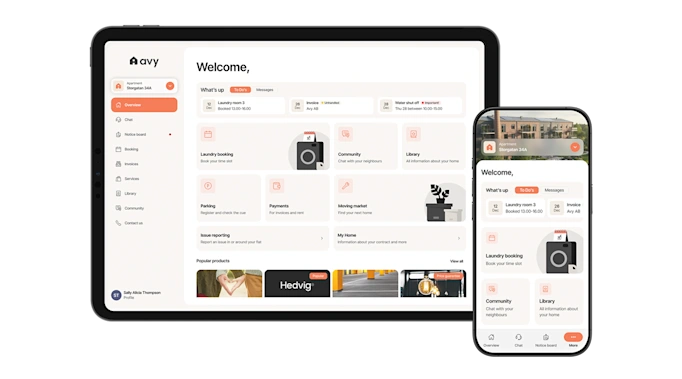
Avy: payments that power growth across markets
Avy is a customer platform for real estate, giving residents a single place to handle everything from rent to broadband. To turn payments into a driver of engagement, Avy needed low-friction and reliable payment flows. They built them with Tink.
Read more

2026-08-11
8 min read
Beyond one rail: What the next chapter of Dutch payments means for merchants
As Dutch payments evolve beyond a single rail, merchants must rethink how they balance cost, risk, settlement speed, and customer experience. Learn how payment optionality, Pay by Bank, and multi-rail strategies can help future-proof your checkout and support long-term business growth.
Read more

2026-08-11
8 min read
Beyond one rail: What the next chapter of Dutch payments means for merchants
As Dutch payments evolve beyond a single rail, merchants must rethink how they balance cost, risk, settlement speed, and customer experience. Learn how payment optionality, Pay by Bank, and multi-rail strategies can help future-proof your checkout and support long-term business growth.
Read more
Get started with Tink
Contact our team to learn more about what we can help you build – or create an account to get started right away.